

Why We Built RocketBox
RocketBox started with a simple frustration: modern computers are incredibly powerful, but moving large files between nearby devices is still far too slow, awkward, and dependent on infrastructure that was never designed for this kind of work.
RocketBox started with a simple frustration: modern computers are incredibly powerful, but moving large files between nearby devices is still far too slow, awkward, and dependent on infrastructure that was never designed for this kind of work. We live in a world where processors, storage, and local connectivity have all improved dramatically, yet the everyday experience of handing off big files often still feels patched together.
We kept seeing the same pattern everywhere. Editors waiting on footage. Developers moving model weights. Architects opening massive design files. Teams sitting a few feet apart, yet still uploading, downloading, syncing, or passing around external drives just to keep work moving. In too many workflows, the delay was not caused by creation itself, but by the friction between one machine and the next. That did not feel like a technology limit. It felt like a missing solution.
A Solution Built for the Edge
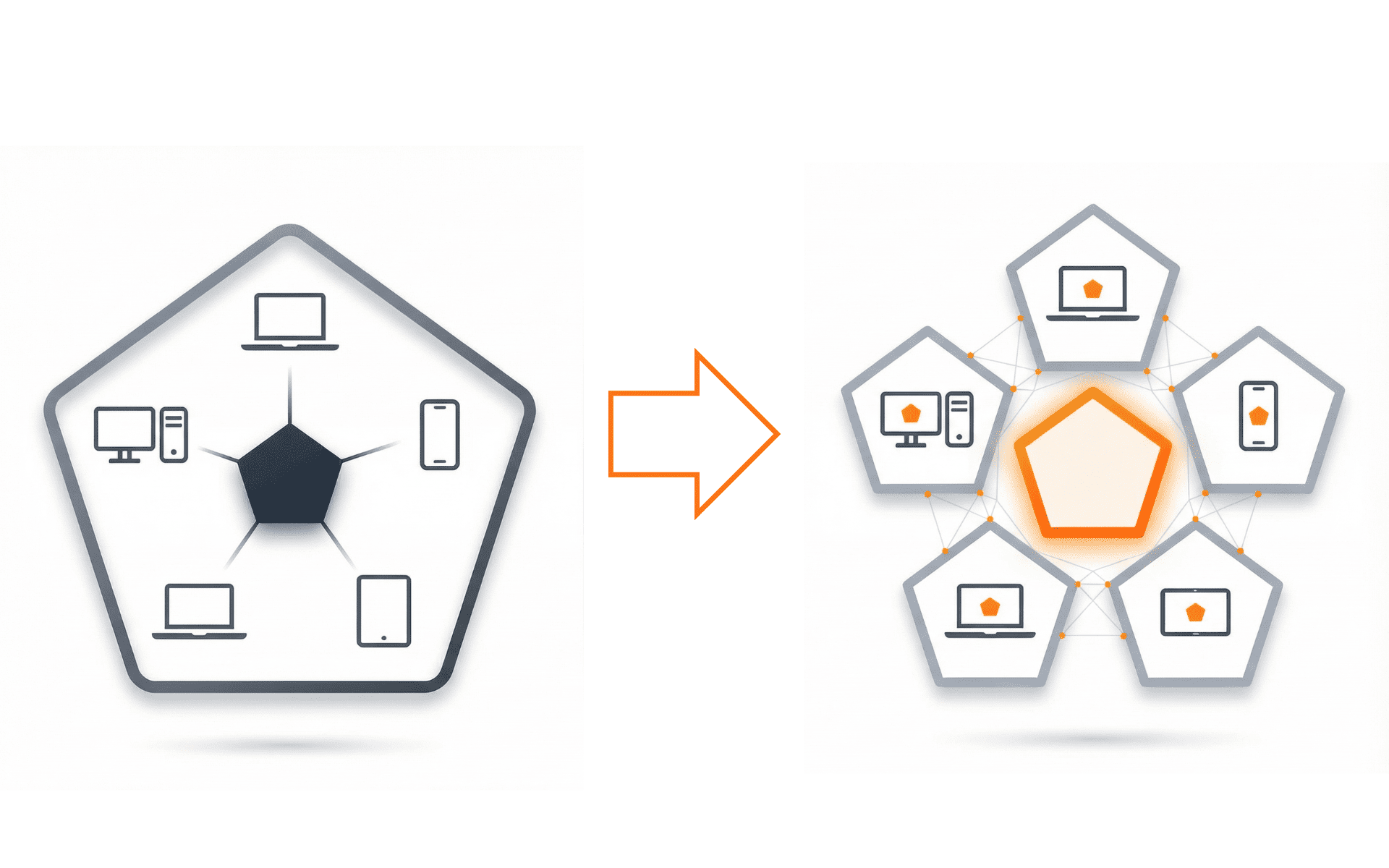
The answer should not be more waiting, more infrastructure, or more dependence on remote systems for work that was fundamentally local. So we built RocketBox to make local, high-speed, private data movement as easy as plugging devices in, while opening the door to a better way for small teams and professionals to collaborate around data that stays close at hand.
Professionals now operate across multiple systems: laptop, desktop, tablet, and specialized machines for creative or technical tasks. At the same time, small teams increasingly need to share large files quickly without handing control to the cloud, waiting on congested office networks, or investing in complicated IT setups.
The reality is that more work now happens at the edge, on local devices and local storage, not just in centralized data centers. That shift changes the expectations users should have. If the data is being created nearby, and the people using it are nearby, the tools for moving it should feel direct, fast, and under the user’s control.
The problem was hiding in plain sight
For years, the standard answer was to force local work through tools built for other jobs. Cloud platforms are excellent for remote sharing and backup, but they add delay, subscription cost, and privacy tradeoffs. Traditional networking can help, but for many small teams and independent professionals it also brings switches, adapters, configuration, and ongoing support.
None of that feels proportional when the machines are sitting on the same desk or in the same room. The problem was hiding in plain sight because people had grown used to compensating for it. They accepted the upload bar, the sync conflict, the extra copy, the misplaced drive, and the version confusion as normal. We did not think that should be normal.
Why RocketBox is built on USB
We chose USB because it is already everywhere. It has been sitting on desks, built into laptops, phones, tablets, and workstations for decades.
Instead of asking users to adopt a new protocol or rebuild their environment, RocketBox turns a familiar connection into a private, high-speed local fabric. That means less setup, fewer bottlenecks, and a path to performance that feels immediate rather than technical. We liked the idea of building on something people already trust and understand. In our view, the best infrastructure is often the infrastructure that disappears into the workflow, letting the user focus on the project instead of the plumbing underneath it.
We also built RocketBox because the timing has never been so demanding. A growing share of the world’s data now lives and is processed at the edge, on personal devices, in offices, and on local drives, while the volume of data created every day keeps climbing.
Industry forecasts continue to point to a major shift away from exclusively centralized computing, with much more enterprise-generated data being created and processed outside traditional data centers and cloud environments. As more workflows become multi-device, privacy-sensitive, and AI-assisted, the gap between how fast people create data and how easily they can move it only gets wider.
RocketBox is our answer to that gap: a simple, plug-and-play platform for fast local transfers, shared workflows, and real control over where data lives. We built it because we believe the next era of computing will not be defined only by bigger clouds, but by better ways for nearby devices and nearby people to work together.
More Articles
The Problem Isn't the Dock. It's That One Isn't Enough.
How RocketBox addresses the multi-device, multi-user connectivity gap — and what comes after.
Read ArticleFoundationSame Port. Every Device. One Fabric.
Thunderbolt carries USB through it. That's why one port works with almost anything ever made — and why RocketBox is built on USB all the way down.
Read Article